 Skip to main content
06.10.2025
⚡ September 2025 UK Energy Market Recap: Stability Beneath the Surface
September brought welcome stability back to the UK energy market.Gas prices held steady throughout the month, while
Continue Reading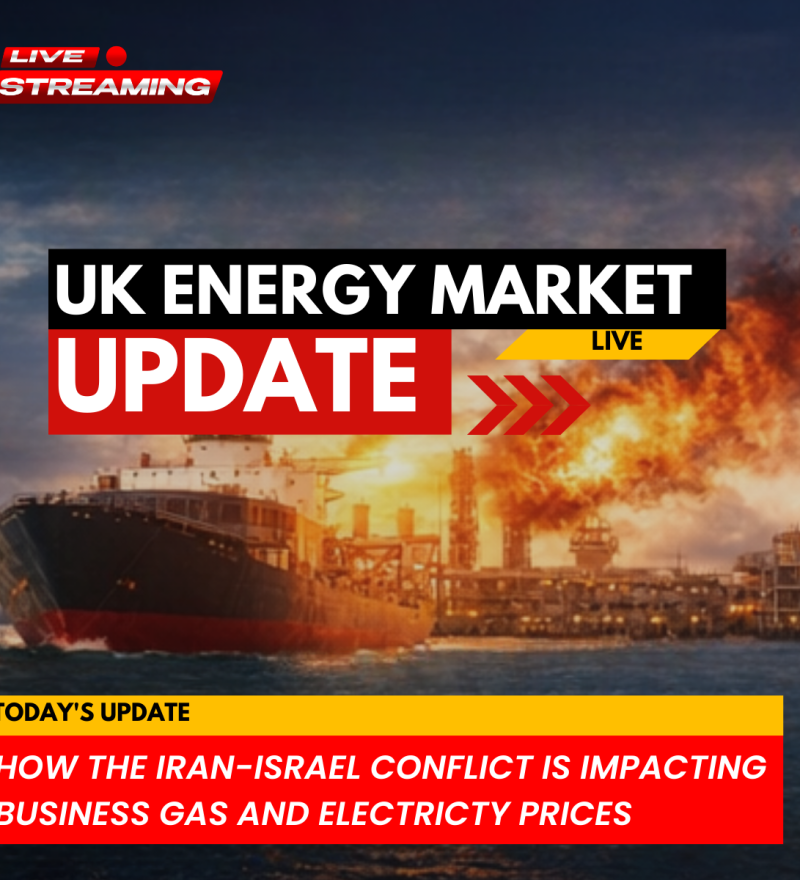
The global energy market has once again been shaken by geopolitical events — and UK business energy prices are already beginning to react.
Following escalating tensions between Iran and Israel, wholesale oil and gas markets have surged, creating uncertainty across the European energy sector. For UK companies already dealing with inflation, rising operational costs, and supply chain pressure, the cost of business electricity and gas contracts could soon increase again.
For businesses approaching contract renewal, understanding the UK energy market and current wholesale trends has never been more important.

Energy prices in Britain are heavily influenced by global markets.
The recent conflict has created fears of supply disruption in the Middle East, particularly around the Strait of Hormuz, one of the world’s most important energy shipping routes.
Around 20% of global oil and gas shipments pass through this narrow channel.
When supply routes become unstable:
Oil prices increase
Liquefied Natural Gas (LNG) prices rise
European gas markets become volatile
UK electricity prices increase
Because the UK imports a large proportion of its gas, international events can quickly influence business electricity prices in the UK
The UK energy system relies heavily on gas to generate electricity.
Recent reports suggest the UK currently has only around two days’ worth of stored gas, making it one of the lowest storage levels in Europe.
Low storage means the UK market reacts quickly to global supply disruptions — pushing up business gas prices UK suppliers offer to companies.

Many businesses assume electricity and gas markets are separate.
However, the UK electricity market is largely influenced by gas generation.
Gas power stations often set the final wholesale price of electricity. When gas becomes more expensive, the cost of business electricity prices UK suppliers charge also rises.
This is why international events often impact both gas and electricity contracts at the same time.
For businesses with contracts expiring in the next 6–12 months, the market may become increasingly unpredictable.
We are already seeing:
Energy prices that once remained fixed for several days may now only last a few hours due to wholesale volatility.
Suppliers are building geopolitical risk into pricing, meaning fixed contracts may appear higher today but could protect businesses if markets continue rising.
Businesses that leave procurement until the last minute risk securing contracts at peak market rates.

Analysts are warning that continued geopolitical instability could create another period of energy market volatility similar to the 2021–2022 global energy crisis.
Key risk factors include:
Disruption to Middle East energy exports
Reduced LNG supply to Europe
Increasing global energy demand
Limited UK gas storage capacity
If supply disruption continues, wholesale markets could remain unstable throughout 2026.
For businesses, this means securing the right energy contract at the right time can make a significant difference to operating costs.
Companies should consider a proactive approach to managing energy procurement.
Key steps include:
✔ Reviewing contracts early
✔ Monitoring wholesale market trends
✔ Comparing multiple suppliers
✔ Working with an energy consultancy
At Next Gen Eco, we help businesses:
Compare UK business energy prices
Secure competitive gas and electricity contracts
Monitor wholesale market movements
Develop long-term energy procurement strategies
If your energy contract is due for renewal, reviewing your options early could help protect your business from market volatility.
The team at Next Gen Eco provides expert advice on business gas and electricity contracts across the UK, helping companies secure the most competitive energy rates available.

The outlook for UK business energy prices in 2026 remains uncertain as global markets respond to geopolitical tensions, supply constraints, and growing demand for energy.
Several factors are currently influencing the business gas and electricity price forecast in the UK.
Escalating tensions in the Middle East are already impacting global oil and gas markets. Disruptions to key shipping routes such as the Strait of Hormuz could tighten supply and push wholesale prices higher.
If tensions continue, analysts believe business gas prices in the UK could remain volatile throughout 2026.
The UK has significantly less gas storage capacity than many European countries. This means the UK wholesale market reacts faster to supply shocks, which can quickly increase commercial energy prices for businesses.
Europe increasingly relies on imported Liquefied Natural Gas (LNG). Competition from growing Asian demand means prices can rise quickly when supply becomes limited.
Gas-fired power stations still play a major role in the UK electricity system. When gas prices increase, the cost of business electricity prices in the UK typically rises alongside them.
While forecasting energy markets is difficult, many analysts expect:
• Continued short-term price volatility
• Suppliers reducing quote validity periods
• Higher risk premiums on fixed contracts
• Increased demand for energy procurement strategies
For businesses with contracts expiring in the next 6–12 months, monitoring the market early could create opportunities to secure better rates before prices increase again.

The UK business energy market is currently experiencing heightened volatility due to global geopolitical tensions and supply uncertainty. Businesses should keep a close eye on key indicators that influence business energy prices in the UK.
Wholesale gas prices
Gas remains the primary driver of electricity prices in the UK. When wholesale gas markets rise, business electricity prices UK suppliers offer often increase as well.
Global LNG supply
Europe relies heavily on imported Liquefied Natural Gas. Any disruption to LNG exports or shipping routes can quickly impact commercial gas prices for UK businesses.
Oil price movements
Oil prices often influence overall energy market sentiment and supply expectations.
Geopolitical events
Developments in the Middle East and other energy-producing regions can rapidly shift global supply dynamics.
For this reason, many companies are now monitoring the UK wholesale energy market months before their contract renewal dates.

UK business energy prices are influenced by global wholesale gas markets, geopolitical events, and supply availability. Because the UK imports a large portion of its gas, international disruptions can quickly affect business electricity and gas prices across the UK.
The best time to secure a contract is typically 6–12 months before your renewal date, allowing businesses to monitor market conditions and lock in competitive rates when prices drop.
It depends on your risk tolerance and contract timing. Fixing prices can protect businesses from market spikes, while flexible purchasing strategies may allow companies to take advantage of price dips.
Businesses can reduce costs by:
• Comparing multiple energy suppliers
• Reviewing contracts before renewal deadlines
• Implementing energy efficiency measures
• Working with energy consultants who monitor the market daily

If your energy contract is approaching renewal, now is the time to review your options.
At Next Gen Eco, we help UK businesses secure competitive energy contracts while navigating volatile market conditions.
Our team provides:
✔ Free business energy price comparisons
✔ Access to trusted UK energy suppliers
✔ Strategic advice on the best time to secure a contract
✔ Ongoing monitoring of the UK wholesale energy market
Many businesses unknowingly overpay for their gas and electricity because they renew contracts too late or without comparing suppliers.
A quick review of your contract could reveal significant savings.
September brought welcome stability back to the UK energy market.Gas prices held steady throughout the month, while
Continue Reading
If you’ve noticed your energy bills fluctuating more than ever, you’re not alone. In 2025, UK businesses
Continue Reading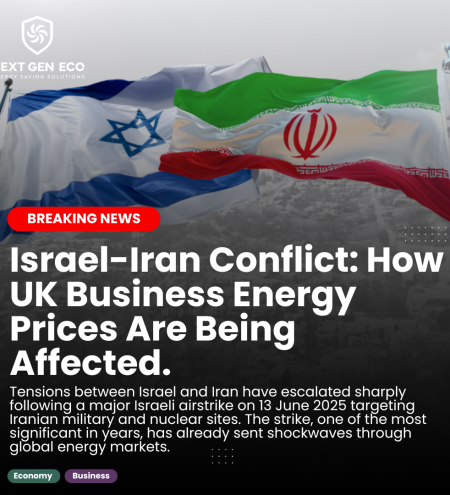
The recent airstrikes between Israel and Iran have sent shockwaves through global markets. While the UK doesn’t
Continue Reading